

Summertime has a lot of potential for autistic high school students. With more flexible schedules and a break from traditional classes, students have an opportunity to focus on skills that can be harder to practice during the school year, including executive function, social connection, and independence.
And while summer may still feel far away, many programs begin planning and enrolling families well in advance. If a summer program might be a good fit for your student, now is a good time to start thinking about what you want that experience to provide.
For high school students preparing for college or another next step, I especially like programs that include an away-from-home component. Spending time outside of familiar routines and support systems can give students opportunities to practice greater independence while still having structure and support available.

There is research to support the value of these experiences. In Bunks Are Good for Brains: The Neuroscience of Sleepaway Camp, Tina Payne Bryson describes camp as an opportunity for young people to encounter challenging situations in a controlled, supportive environment. Working through new experiences can help build emotional regulation, resilience, and confidence, all important parts of becoming more independent.
Research on summer programs for neurodivergent youth has also found social and emotional benefits, including reduced social isolation and improved self-esteem. Young people with disabilities have described the value of spending time in environments where disability is understood and where they feel less pressure to filter their behavior for peers.
Away-from-home experiences can also provide something that is difficult to recreate at home: time away from parents and the support networks that are built into everyday life.
That doesn’t mean removing support. A well-matched program gives students an opportunity to try more on their own while still having people available to help. For autistic high school students preparing for life after graduation, that can provide useful information about what they are ready for and where they may need more practice.

There is no perfect summer program. There are many great programs with different focus areas, so before you start comparing options, sit down with your student and talk about what you both hope they will get from the experience.
Maybe your student wants to experience living on a college campus. They may be ready to spend time away from home for the first time or want more opportunities to practice executive function and independent living skills. Another student may benefit from a program built around social connection, travel, or an area of personal interest.
Knowing the goal gives you a much better starting point for deciding which programs are worth exploring.

Once you know what you are looking for, there are several practical factors that can help you narrow the options:
- Location: Do you want your student within driving distance? For a first experience away from home, knowing that family isn’t too far away may be important.
- Program focus and structure: Is the program designed specifically for neurodivergent students? Does its focus match what your student wants to practice or experience?
- Length: Programs can range from a few days to several weeks. A shorter experience may provide useful exposure, while a longer program can give students more time to adjust to living away from home.
- Cost: Look beyond the program fee and consider travel and other expenses your student may have while away. It is also worth asking whether scholarships or financial assistance are available.
Your student’s perspective belongs in these conversations too. Looking at programs together gives them an opportunity to think about what they want, ask questions, and have a say in an experience that is ultimately theirs.
If your autistic student is considering college, college readiness should be part of your conversations well before applications begin.
Being ready for college classes is different from being ready for college life. Moving from high school to college brings changes in living arrangements, routines, meals, and the amount of responsibility students have for managing their own time and needs.
An away-from-home summer program can give high school students a chance to practice some of that independence before they arrive on a college campus. Depending on the program, students may experience dorm living, college coursework, a less structured schedule, or simply what it feels like to be responsible for more of their day.
The experience may also show you where more support is needed. That information can be just as valuable as discovering what your student is already able to manage independently.

The number and variety of summer programs available to autistic and neurodivergent students has grown, which gives families more options. It can also make it harder to figure out where to start.
Learning about programs, understanding who they serve, comparing their focus and support, and narrowing down your choices takes time. Starting the process well before summer gives you and your student more time to find an experience that fits their goals.
A summer program can be fun, but it can also give your student something much more lasting: an opportunity to practice greater independence in a supportive environment and learn more about what they need as they prepare for life after high school.
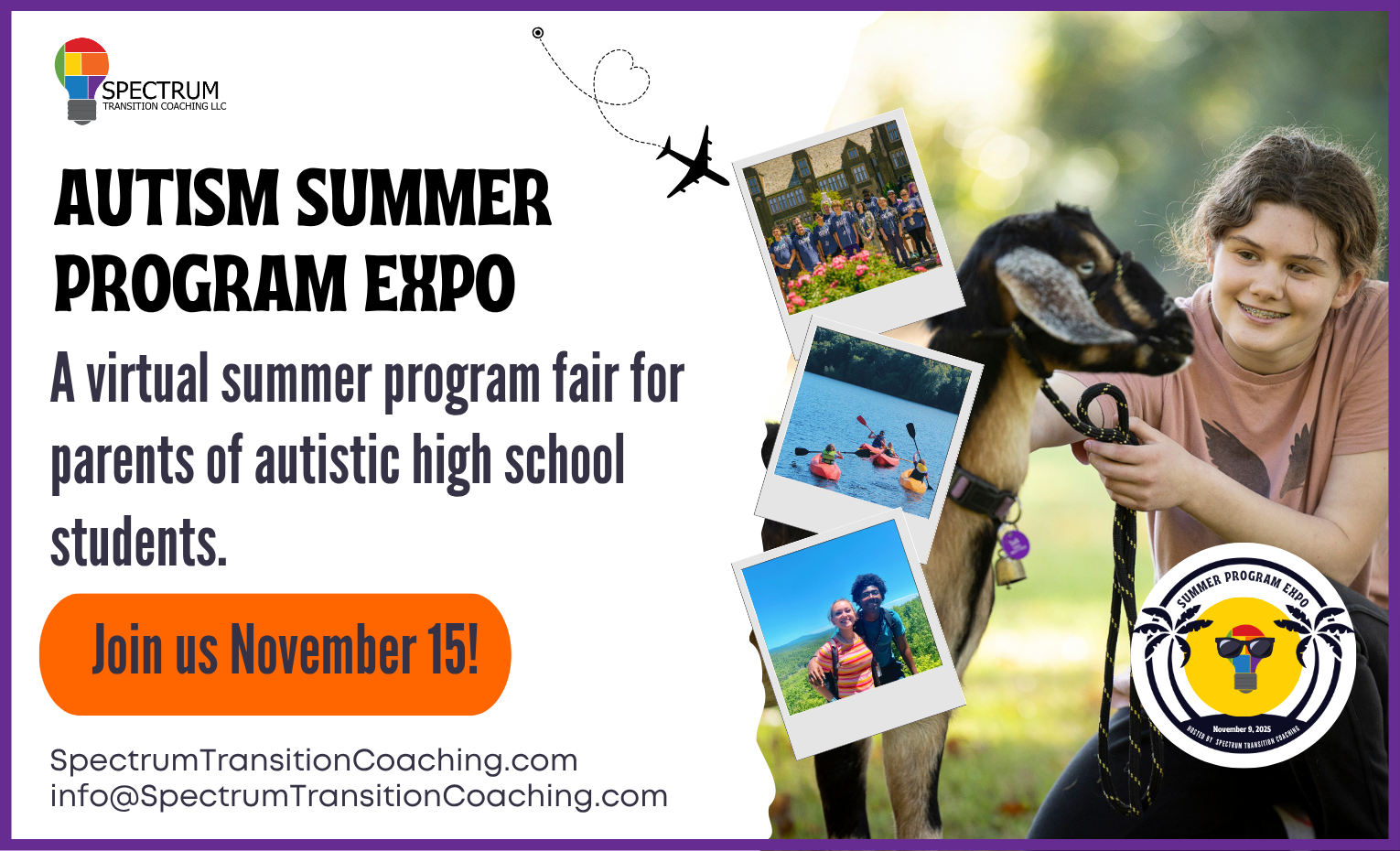
To make some of that research easier, I host Spectrum Transition Coaching’s Autism Summer Program Expo, where families can hear directly from several programs serving autistic and neurodivergent teens and young adults, learn more about the experiences
On Sunday, November 15, from 7:30–9:00 PM ET, Spectrum Transition Coaching is hosting our Autism Summer Program Expo, a free virtual event for families exploring summer opportunities for autistic and neurodivergent teens and young adults.
You’ll hear directly from representatives from this year’s participating programs:
You’ll learn who each summer program serves, what its summer experience looks like, and what kinds of support it provides. You’ll also have the opportunity to compare very different options and ask questions directly to program representatives.
If you can’t attend live, register anyway. Everyone who registers will receive a replay of the program introductions.
Summer may be months away, but exploring options now gives you and your young adult time to think about what they want from the experience and find a program that supports the next step they’re ready to take.